
Lord’s Supper | 400 Year-Old Prophecy

Updated: May 2
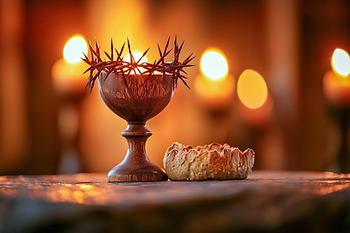
DID YOU KNOW Jesus fulfilled a 400 year-old prophecy when he instituted the Lord’s Supper? One day, I was translating the book of Malachi from Hebrew into English and noticed verse 1:11 was translated differently in various English versions.
Due to the ancient Jews showing disdain for the condition of the temple offerings, the Prophet Malachi predicted a day when God would turn away from the Temple to accept a “pure offering” presented by the Gentiles worldwide: “For from where the sun rises [the East] even to where the sun sets [the West], my Name will be great among the nations [Gentiles], and in every place [they] will draw near to my Name with incense [prayer] and a pure offering [minchah]. For my Name [will be] great among the nations [Gentiles] says the Lord Almighty” (Malachi 1:11, my translation from Hebrew).
Modern scholars demonstrate confusion about *this* offering—5 English versions translate it singularly as “pure offering” (KJV, NKJ, ESV, RSV, YLT); but 2 newest versions render it plurally as “pure offerings” (NIV, NLT). Interestingly, the New American Standard (NAS) version translates it as, “a grain offering that is pure.”
For clarity, the Hebrew word is “minchah” that usually refers to a grain offering. People grind grain to make flour, and from flour, we make bread! In essence, the Prophet Malachi saw people all around the world mysteriously gathered around bread to offer God acceptable worship. Four-hundred (400) years later, this prophecy was fulfilled when, “Jesus took bread, and after blessing it broke it and gave it to the disciples, and said, ‘Take, eat; this is my body’" (Mat 26:26 ESV).
As validation, in the 1st century, Jewish Christians familiar with this prophecy wrote a church manual entitled "The Teaching of the Lord through the Twelve Apostles to the Nations”—the short title is “The Didache” (Greek for “teaching”). Notice to what scripture they refer when teaching about the Lord’s Supper: “But every Lord’s day [i.e., Sunday], gather yourselves together, break bread, and give thanks after having confessed your transgressions, that your offering may be pure. But let no one who is at fault with his neighbor come together with you, until they be reconciled, that your offering may not be profaned. For this is that which was spoken by the Lord: ‘In every place and time offer to me a pure offering; for I am a great King, says the Lord, and my name is wonderful among the nations’” (Didache,14:1-3, my translation from Greek).
Sadly, denominationalism caused (causes) many modern scholars to overlook this historical truth due to lost heritage. Nevertheless, your biblical ancestors understood the Lord's Supper to be the revelation of New Covenant worship--Jesus fulfilled another messianic prophecy when He instituted His Supper. This is why it was central to every Sunday worship service for nearly 1,900 years!
I pray this insight blesses you as we commemorate the Lord’s Supper--especially on the night of Holy Thursday (that's technically Friday, since the Bible teaches a new day begins at evening—“there was evening and morning the first day (Gen 1:5)… second day (1:8)… third day (1:13)…” and so forth).

SIGN-UP for my Short-Blogs:
ORDER "When Demons Surface"
Book: https://a.co/d/0gojMkHe
Audiobook: https://a.co/d/0cmAkTAY



Really good. And I read today that the hyssop Jesus was given on the cross was also used when Hebrews were supposed to put blood around the door in the Exodus account. No coincidences in the Bible.
Wow! New insights never get old. Jesus is the grain offering too. And I read this on Thursday eve. I love learning about Jewish Jesus but you shed light on what church is supposed to be maybe. I understand Passover Seder but I never really understood Communion. Tk u!
Thank you for this timely teaching Steve. I've never made this connection before. Deeply meaningful. Have a blessed Easter celebrating our LORD.